


News
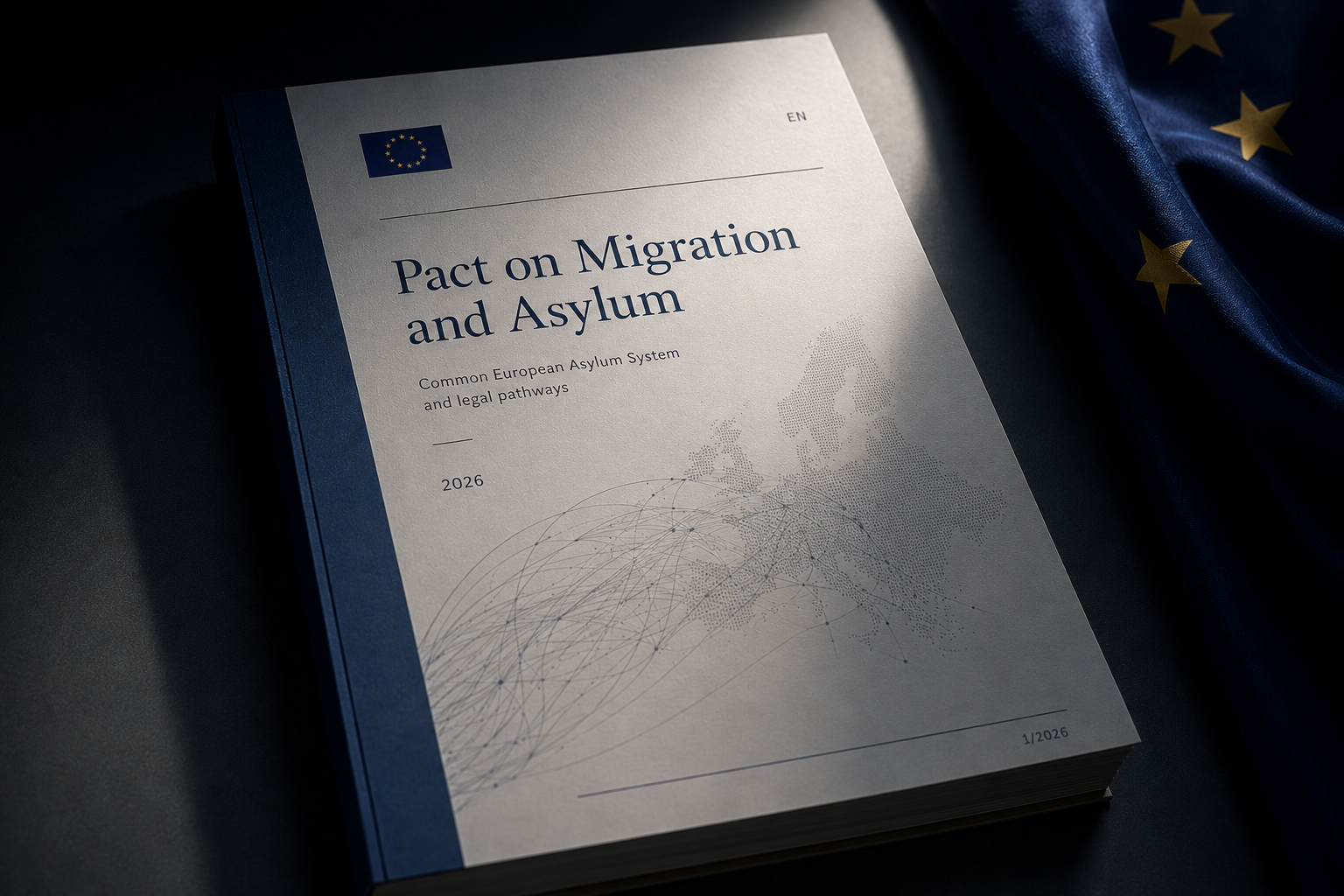
Lithuanian courts hear the first case on the application of the new EU Pact on Migration and Asylum

Just weeks after the European Union’s far-reaching reform of its migration and asylum system began to apply, Lithuanian courts have already had to consider how the new rules work in practice in an individual case. The Supreme Administrative Court of Lithuania (SACL) has examined the country’s first case raising issues under the EU Pact on Migration and Asylum, including the application of the asylum border procedure, restrictions on an applicant’s freedom of movement, and the distinction between such restrictions and detention.
The new EU Pact on Migration and Asylum fundamentally reshapes the European asylum system as it has operated until now. It seeks to establish more consistent and faster procedures across the European Union, particularly in cases where third-country nationals cross the EU’s external border irregularly and apply for international protection. One of the key innovations is the border procedure, which allows certain applications for international protection to be examined before the applicant is granted the right to enter and move freely within the territory of a Member State. The provisions of Regulation (EU) 2024/1348 became applicable on 12 June 2026 and apply directly in EU Member States.
Lithuania’s first case of this kind arose almost simultaneously with the new rules taking effect. On the evening of 12 June 2026, a national of a North African country crossed the Lithuanian state border irregularly from Belarus by swimming across the River Nemunas in the Lazdijai district. Upon entering Lithuania, he did not immediately apply for international protection. Six days later, he was apprehended at Vilnius Airport while attempting to board a flight to Düsseldorf without a legal basis for staying in the European Union or valid travel documents. The following day, while in detention, he applied for international protection in Lithuania and submitted a written application on 22 June.
The Migration Department decided to examine the substance of his application under an accelerated procedure, applying the border procedure provided for under the new EU framework. At the same time, it initiated a procedure to determine the Member State responsible for examining the application. The applicant was accommodated at a temporary accommodation facility designated by the competent reception authority but was not granted the right to move freely within Lithuanian territory.
This decision became one of the first questions concerning the practical application of the new EU Pact on Migration and Asylum to reach the Lithuanian courts. The applicant argued that the restriction on his freedom of movement effectively amounted to detention. He asked to be allowed to remain at the temporary accommodation facility without restrictions on his freedom of movement, arguing that he was cooperating with the authorities, had provided a copy of his passport, posed no threat to public order or national security, and had complied with the conditions attached to permits allowing him to leave the accommodation facility temporarily.
The case required SACL to address an important distinction under the new legal framework: whether accommodating an asylum applicant at a designated location without allowing that person to move freely within the territory of the state amounts to detention, or whether it constitutes a separate measure inherent in the border procedure itself.
The Court found that, in this case, the applicant was not detained under the general detention rules laid down in the Lithuanian Law on the Legal Status of Aliens, nor had an alternative to detention been imposed on him. Instead, his placement at a temporary accommodation facility, without the right to move freely within Lithuanian territory, was based on a specific statutory provision applicable to persons seeking international protection while undergoing the border procedure.
This distinction also affects how such restrictions are assessed. SACL noted that restrictions on freedom of movement imposed during the border procedure are linked not to an individually established need to detain a person, but to the application of the border procedure itself and the fulfilment of the conditions laid down by law. Consequently, the fact that an applicant cooperates with the authorities, poses no threat to public order or national security, or properly complies with temporary leave arrangements does not, in itself, mean that the restriction on freedom of movement inherent in the border procedure can no longer be applied.
At the same time, the case highlights another important feature of the new Pact: the border procedure is not unconditional. EU legislation sets out circumstances in which a Member State must refrain from applying the procedure or discontinue it once it has begun. These include situations where the necessary support cannot be provided to persons with special reception needs, where special procedural guarantees are required, where there are duly justified medical reasons, including those relating to mental health, or where the safeguards and conditions required under EU law cannot be ensured.
SACL found that none of these circumstances was present in the case before it. The judicial panel concluded that there were no grounds for finding that the border procedure had been applied without justification or that circumstances had arisen requiring it to be discontinued. The Court also took into account that the applicant was permitted to leave the temporary accommodation facility with the authorisation of its head and had made use of this possibility on several occasions.
The applicant’s case has also reached the Lithuanian courts in another respect: the question of whether he should be granted international protection. On 7 July, the Migration Department decided not to grant him international protection, to remove him to his country of origin, to prohibit his entry into Lithuania for two years, and to enter an alert in the Schengen Information System concerning the refusal of entry and stay. The applicant challenged that decision. On 30 July 2026, the Regional Administrative Court dismissed his appeal, and on 11 August his appeal against that judgment was admitted for examination. At the time referred to in the case documents, the question of international protection had therefore not yet been finally resolved.
SACL further clarified that the mere fact that the Migration Department’s decision refusing international protection is being challenged before a court and has not yet become final does not, in itself, constitute grounds for discontinuing the border procedure or lifting the restriction on freedom of movement imposed under that procedure. This would require either the existence of specific circumstances laid down in the EU Regulation or individual circumstances making it no longer permissible to restrict the person’s freedom of movement.
SACL dismissed the appeal lodged by the national of the North African country and upheld the decision of the court of first instance. In Lithuania’s first case involving the practical application of the new EU Pact on Migration and Asylum, the Court therefore found no circumstances indicating that the border procedure had been applied without justification or should have been discontinued. Nor did it find grounds for lifting the restriction imposed on the applicant’s freedom of movement.
The case marks a new stage in the case-law of Lithuania’s administrative courts. From now on, the courts will be called upon not only to apply national rules on asylum and migration, but also to define in practice the boundaries of the new EU-wide framework: when the border procedure may be used, to what extent a person’s freedom of movement may be restricted while it is applied, when such restrictions may cross the line into detention, and which individual circumstances require a Member State to discontinue the border procedure.


Contacts
Žygimantų st. 2,
LT-01102 Vilnius Lithuania
Phone: +370 5 279 1005
Mobile: +370 655 22502
E-mail: info@lvat.lt
Working hours
I-IV 8.00 – 17.00
V 8.00 – 15.45
Lunch break 12.00 – 12.45
Hours for receiving complaints and requests at the office:
I-IV 8.00 – 17:00
V 8:00 – 15:45
Additional hours for pre-registered persons for receiving complaints and requests at the office:
I 17.00 – 17:30
III 17.00 – 17:30
Contacts
Supreme Administrative Court of Lithuania
Žygimantų st. 2,
LT-01102 Vilnius Lithuania
Phone: +370 5 279 1005
E-mail: info@lvat.lt
Code 188734870
Working hours
I-IV 8.00 – 17.00
V 8.00 – 15.45
Lunch break 12.00 – 12.45
Hours for receiving complaints and requests at the office:
I-IV 8:00 – 17:00
V 8:00 – 15:45
Additional hours for pre-registered persons for receiving complaints and requests at the office:
I 17.00 – 17:30
III 17.00 – 17:30
Publications

Maps of courts

