


News
SACL presented 2025 annual report alongside a discussion on the trust of the judicial
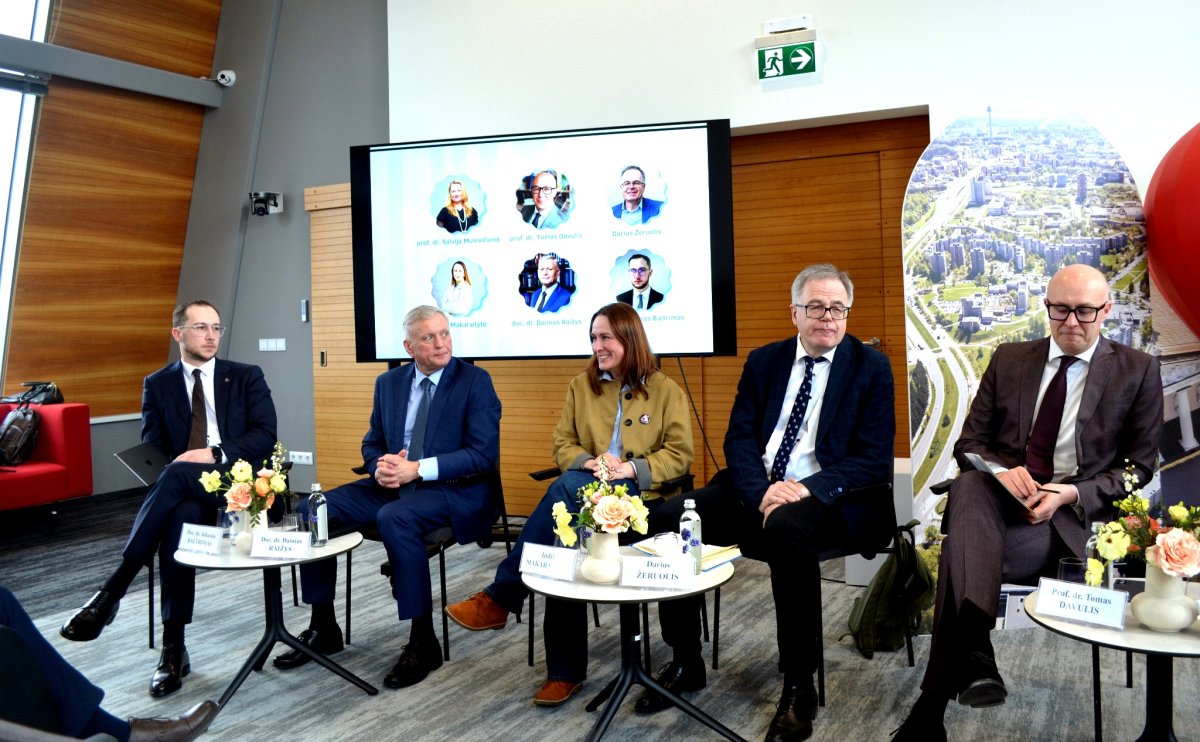
On 13 April 2026, the Supreme Administrative Court of Lithuania (SACL) presented its 2025 Annual Report and the main developments in its case-law to lawers, representatives of public institutions, academia and the wider public. The theme of this year's event was Administrative Justice and the Role of Judges in Strengthening Public Trust in the Courts.
During the event, SACL President dr. Skirgailė Žalimienė presented the Court's key performance indicators, the structure of its caseload, the average duration of proceedings and the main trends in its jurisprudence. She noted that in 2025 the Court received more than 4,000 new cases and resolved over 3,300 administrative cases, illustrating both the diversity of disputes brought before the Court and the intensity of its work.
Presenting the Court's annual results, dr. Žalimienė highlighted that the average length of appellate administrative proceedings was approximately 10.5 months. Around 35 percent of all cases concerned the legal status of foreign nationals and asylum matters. She also noted the growing number of complex disputes involving economic regulation, competition law, financial market supervision and national security, as well as the increasingly close relationship between administrative justice and European Union law. In 2025, SACL submitted seven requests for preliminary rulings to the Court of Justice of the European Union.
"Over the past twenty-five years, SACL has become an integral part of Lithuania's legal system, consistently safeguarding individual rights and shaping the standards of administrative law. Yet institutional maturity alone is not enough to earn public trust. It also depends on whether we are able to be understandable, visible and convincing in every case," said dr. Skirgailė Žalimienė.
The presentation of the Court's annual review was followed by a panel discussion entitled Administrative Justice and the Role of Judges in Strengthening Public Trust. The discussion brought together prof. dr. Salvija Mulevičienė of Mykolas Romeris University, prof. dr. Tomas Davulis, Justice of the Constitutional Court of the Republic of Lithuania, public governance expert and Director of the Lithuanian State Historical Archives Darius Žeruolis, Head of Investigative Journalism at Lithuanian National Radio and Television Indrė Makaraitytė, SACL Judge dr. Dainius Raižys, and dr. Johanas Baltrimas, Vice-Dean of the Faculty of Law at Vilnius University.
The participants discussed the evolving role of judges, the relationship between administrative courts and society, the importance of judicial communication, and the place of administrative justice within both the national and the European legal order.
Summing up the discussion, participants emphasised that public trust in the courts is not something that can be taken for granted; rather, it is built through individual cases and people's experience of the justice system. They stressed that, alongside the legality of judicial decisions, their clarity, well-reasoned justification and the fairness and respect demonstrated throughout the proceedings are equally important. The discussion also explored the changing role of administrative judges, the evolution of judicial communication with society, the significance of administrative justice within the Lithuanian and European Union legal systems, and the continuing Europeanisation of administrative law.
The event once again highlighted the essential role of administrative justice in safeguarding individual rights and ensuring oversight of public administration. It also demonstrated that public trust in the courts is built gradually—through both judicial decisions and meaningful dialogue with society.
The full SACL 2025 Annual Report and the overview of key developments in the Court's case-law are available here.


Contacts
Žygimantų st. 2,
LT-01102 Vilnius Lithuania
Phone: +370 5 279 1005
Mobile: +370 655 22502
E-mail: info@lvat.lt
Working hours
I-IV 8.00 – 17.00
V 8.00 – 15.45
Lunch break 12.00 – 12.45
Hours for receiving complaints and requests at the office:
I-IV 8.00 – 17:00
V 8:00 – 15:45
Additional hours for pre-registered persons for receiving complaints and requests at the office:
I 17.00 – 17:30
III 17.00 – 17:30
Contacts
Supreme Administrative Court of Lithuania
Žygimantų st. 2,
LT-01102 Vilnius Lithuania
Phone: +370 5 279 1005
E-mail: info@lvat.lt
Code 188734870
Working hours
I-IV 8.00 – 17.00
V 8.00 – 15.45
Lunch break 12.00 – 12.45
Hours for receiving complaints and requests at the office:
I-IV 8:00 – 17:00
V 8:00 – 15:45
Additional hours for pre-registered persons for receiving complaints and requests at the office:
I 17.00 – 17:30
III 17.00 – 17:30
Publications

Maps of courts

